

Boom Man Ethereum at $3,346.59 it Crossed the $3K Mark. It is The Best Time to Buy it as Market Research Show That it Can $5,000 in a Week & It Would be Harder for you to buy one Ethereum at $5,000 & Easy for you When it is $3,000. Due The Growth of Ethereum its Co-creator has Become the Worlds Youngest Crypto Billionaire.

Today's Crypto Headline News
~ "Bitcoin is no Longer the Cryptocurrency King'' Says Investors.
~ Thailand New Cryptocurrency Regulation Requires users to be Physically Present to Open Accounts.
~ Americas Fifth Largest Banking Institution US Bank to Offer Cryptocurrency Custody.
~ E-Commerce Giant EBAY Looking at Accepting Cryptocurrency for $187 Million Buyers, CEO Reveals.

~ Ghana Regulator Labels Crypto Transactions Illegal-Urges People to ''Stay Away From Them.''
~ Cryptocurrency & Blockchain Initiatives Continue in Payments, NET`s & Media, Crypto Enforcement & Threats also Continue Across Global.
~ Dogecoin Price Surges as Popular Trading app adds Cryptocurrency for Millions of New Users.
~ Blockchain Could Transform Retail form Supply Chain & Inventory Management to Product Provence.
Conclusion

- Bitcoin at the Price of $55K.
- Ethereum at the price of $3,346.59.
- Ethereum Founder Become the Worlds Youngest Crypto Billionaire.
- EBAY To Acquire Cryptocurrency.
Tips & Tricks
- Today I Will Tell You How To Avoid Cryptocurrency Scams
They've been termed the Wild West of investments. Cryptocurrency, The white-hot popular digital currency with volatile values that can boom and bust in days or even hours and little regulation.
When there are large amounts of money to be made or lost, that's when scammers swoop in.
A recent report by Bolster found more than 400,000 Cryptocurrency scams were reported just last year alone.
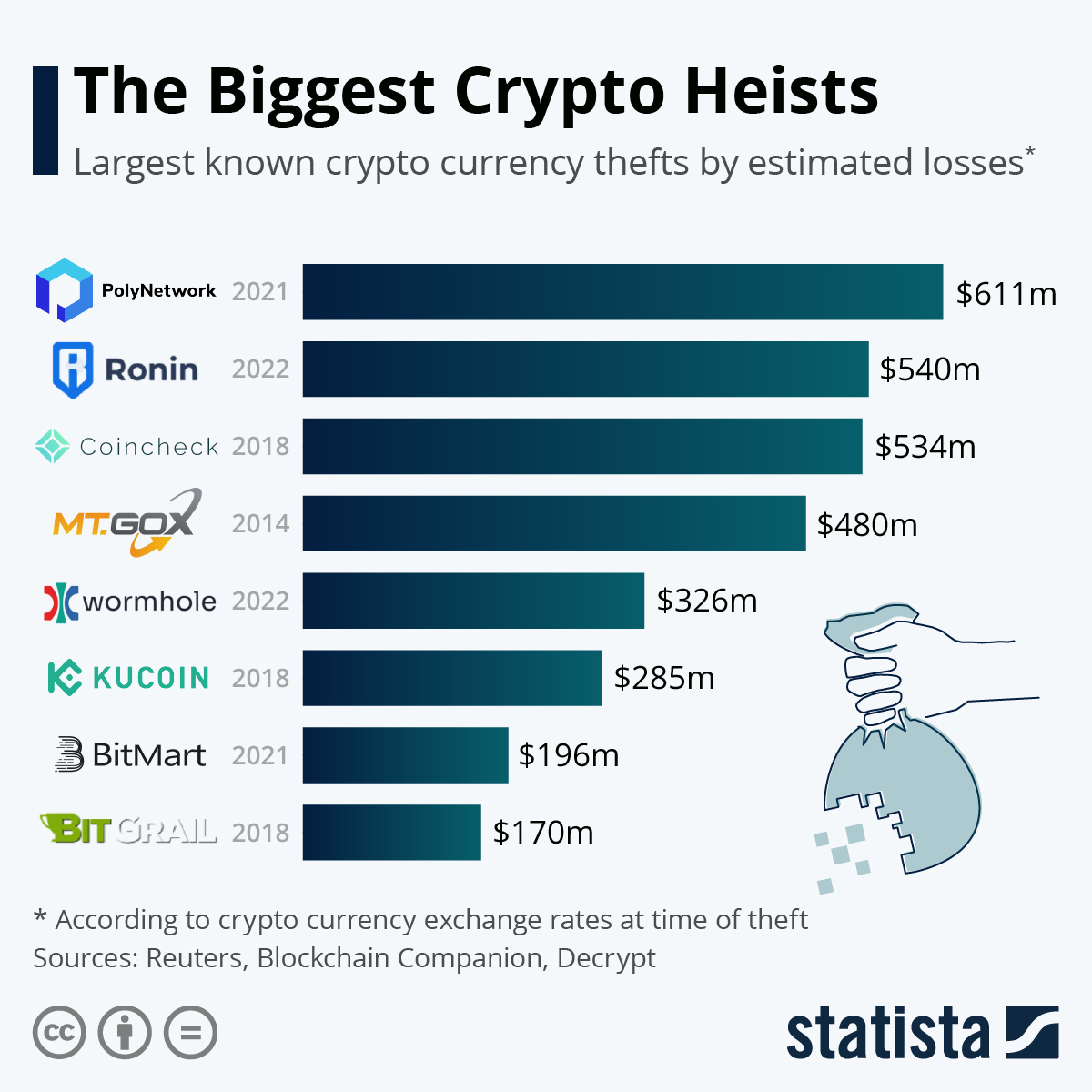
That's an increase of 40% year to year. That number is expected to jump an additional 75% this year costing consumers tens of billions.
So what are the most popular cryptocurrency cons? First, there's the fraudulent giveaway. A fake ad uses pictures of Bitcoin billionaires Tyler and Cameron Winkelvoss without their permission, promising twice your payment back if you contribute. Another fraudulently uses Tesla founder Elon Musk's picture promising to double your return.
Others are fake ICOs, or initial coin offering. A legitimate ICO will raise money for a new cryptocurrency company. But, fraudsters create a fake company, stir up hype online, persuading investors to buy. According to published reports, fraudulent ICOs cost investors $375,000.
Also, Ponzi schemes may be easy to spot but people still fall for them. U.S. officials say One Coin ran a $4 billion Ponzi scheme. Remember, if an investment promises returns, it's a tell-tale sign of a Ponzi.
There are some big takeaways.
First, be wary of crypto investment pitches that come on social media platforms or from cold callers.
/beware-of-these-bitcoin-scams-4158112_FINAL-ab2312b1bdec40e2887f3d663fbd6e0b.png)
Watch out for heavy sales pitches to "invest now." Pump and dump schemes make an investment look like its value is rising and then crashes after you invest.
Remember to research before you invest. Never wire money or provide any credit card or bank account information until you check the investment out first.
If You Want Free NFT's Read This Post Today is the Last Day & It is Provided by Entrepreneur Garyvee. You Can go & see His Project of 5/5/2021 in his Instagram Account.
The People Who are Beginner in Crypto Should See This
Top 5 Bitcoin and Crypto Scams
Cryptocurrency might be a relatively new asset class, but you’ll notice a lot of these scams are recycled versions of classic cons. Here are 5 to keep an eye out for — you’ve probably seen similar versions of these in the past.
Scam #1: Social media con artists
Some good old-fashioned password hacking is an easy way for scammers to get unsuspecting people to send them Bitcoin. A notorious example occurred in January 2021 when hackers posed as Elon Musk and posted a link to a Bitcoin wallet, offering to double any BTC deposit sent to that address. Sounds fishy already, doesn’t it?
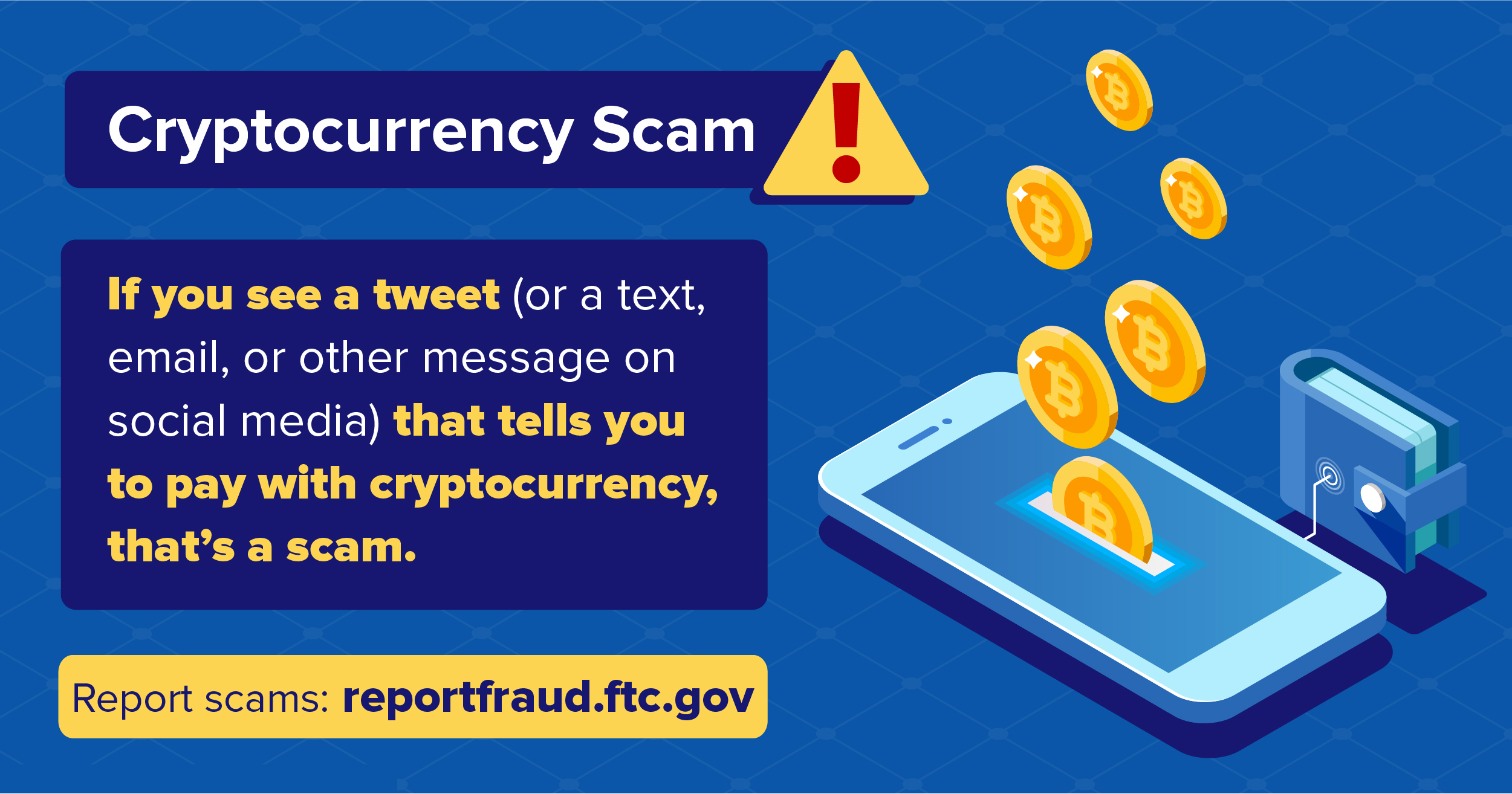
Unfortunately, many of Musk’s followers would leap off the Golden Gate Bridge if he did it first, so the BTC began flying into the linked wallet. Of course, it wasn’t Musk’s wallet — in fact, the account in question wasn’t even Musk’s Twitter! The scammers simply hacked a different Twitter with a blue checkmark, changed the profile picture and name to that of Musk’s, and responded to his previously posted tweets with a link to the wallet.
Anyone falling victim to this particular scam has more egg on their face than the grill at Denny’s. But social media is the primary vehicle for crypto scammers, who trick other users into sending them Bitcoin or signing up for a fake exchange (among other examples). Beware of anyone randomly offering free crypto on social media; it’s almost surely a scam.
Scam #2: DeFi rug pulls
Decentralized finance (DeFi) platforms aim to reboot traditional financial models by allowing users to stake their cryptocurrencies to networks and earn profits through interest, like depositing funds in a savings account or CD. As the cryptocurrency remains locked in the network, the owner receives periodic payments that often far outpace the rates offered by banks.
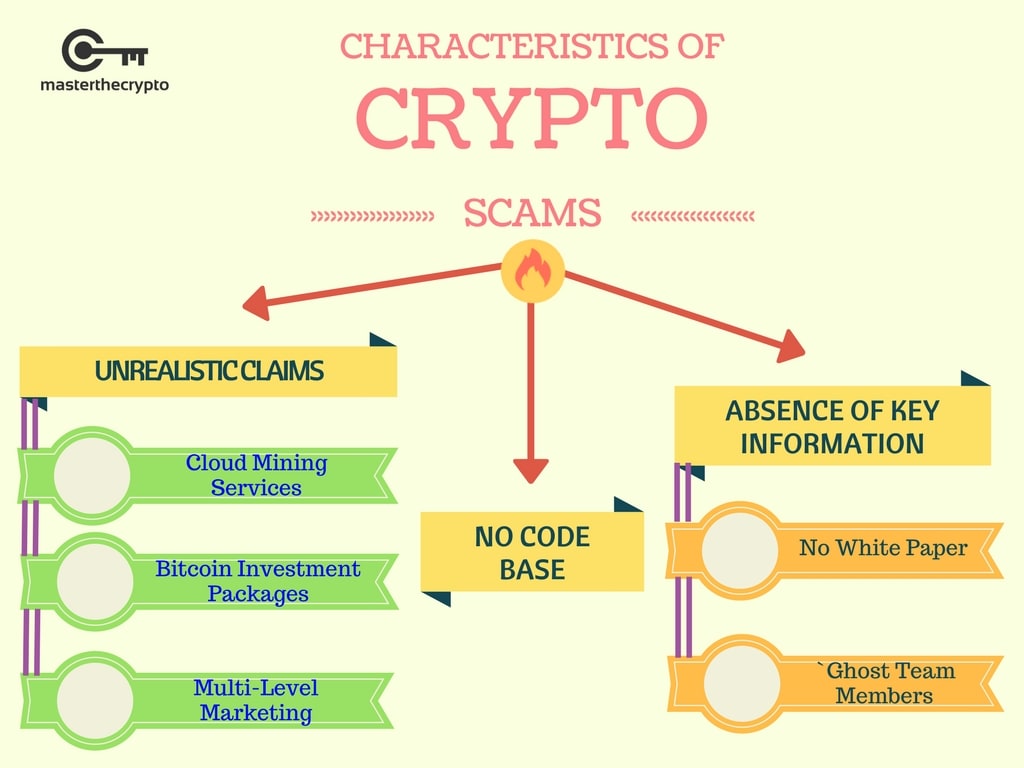
While most DeFi platforms have noble intentions, some are just flat-out scams. Investors are tricked into locking up their crypto with a seemingly reputable DeFi company, such as Burn Vault Finance and Compounder Finance. With promises of excellent returns for lending their money, the scammers enter the investors into smart contracts, which later enable them to steal the funds without a chance for the true owner to recover them. The scammers then disappear into a cloud of smoke. Beware of DeFi platforms promising returns that sound too good to be true.
Scam #3: NFT scams
NFTs or nonfungible tokens are one of the current investment crazes thanks to the high prices being fetched by everything from pieces by internet artists to LeBron James highlights on NBA TopShot. NFTs exist on the blockchain and can be transferred back and forth being different users or marketplaces.
While the actual image or video in the NFT is easily duplicable, the specific hashtag code that points to the NFTs location is not. But possession is ten-tenths of the law when it comes to crypto and whoever possesses the hashtag holds the power. If your account is hacked and the NFT transferred to an outside user, you’ll have a difficult time getting it back (or compensation for it).
Additionally, scammers prey on the prospects of large profits and offer fake NFTs to prospective buyers. NFT scams are on the rise — only purchase them through legitimate channels and always use two-factor authentication when available.
But Garyvee Program is not a Scam he is a Millionaire, a Inspiring Man, Entrepreneur, Social Media Personality.
Scam #4: Altcoin pump and dumps
Ah, the classic pump and dump. Like penny stocks, altcoins are often cheap and illiquid, with market caps small enough that a few large players can send the price soaring. The crypto pump and dump goes down just like its penny stock cousin — a crypto guru or influencer buys up large amounts of some speculative altcoin and then pumps up the potential of that coin to their followers.
Once the crowd piles in, the scammer exits the position and the unsuspecting followers are left holding the bag. Altcoins are volatile like penny stocks and it’s not rare to see investments cut in half on a single day.
Scam #5: Viruses and malware
Scammers don’t always need to reinvent the wheel. Sometimes, a good old-fashioned computer virus or malware is enough to gain access to a person’s crypto wallet and transfer all the funds out. And since these transactions are irreversible, victims have no recourse. Luckily, viruses and malware are well-known and virus detection software can prevent most attacks. Again, always protect your wallets and apps with two-factor authentication.
Additional Scams
Other scams include building an entire fake exchange, which is what happened with BitKRX in South Korea. Investors poured millions into the exchange because the promises of profit were so great. In reality, they were simply stealing money from their clients. South Korean authorities eventually shut down the unethical exchange, but not before investors lost millions upon millions in capital.
Some scams don’t even involve stealing any crypto. A popular Bitcoin scam involves fake mining hardware, which is often expensive and difficult to find. Mining Bitcoin requires tremendous energy and computational power, so prospective miners often jump at the chance for cheap equipment. But after purchasing a supposedly state-of-the-art Bitcoin mining machine, the buyer often finds the power and efficiency have been vastly overstated — if the darn thing even works at all. Be cautious of anyone offering cheap mining equipment on eBay or Amazon.
Safest Brokers for Trading Bitcoin
Choosing a reputable broker for cryptocurrency trading will offer more security and peace of mind over your investments. Here are a few of our favorites.
Protect Yourself from Crypto Cons
As long as the price of Bitcoin keeps rising, scammers will keep trying to pry it from victims. In order to protect yourself, engage a little common sense — always use two-factor authentication when available, rotate your passwords, don’t lose your access keys, and never trust anyone with an offer that sounds too good to be true. Cryptocurrency investing is likely here to stay, so scammers will always be on the lookout for the next mark. Don’t let it be you.
Disclosure75% of retail investor accounts lose money when trading CFDs with this provider. You should consider whether you can afford to take the high risk of losing your money.
Frequently Asked Questions

Is Bitcoin legit and safe?
Yes, Bitcoin is safe to own and trade on trusted exchanges and brokers. But transactions are irreversible, so never hand over BTC to any person or firm you don’t know or trust.
Does Bitcoin give you real money?
Bitcoin is a digital currency paid as a reward to miners who approve transactions on the blockchain. Bitcoin can be exchanged for U.S. dollars or other legal tender and used for purchases in a few places (like a Tesla showroom).
How do I get my Bitcoins back from scams?
You can’t. Bitcoin transfers cannot be reversed and the scammer is often long gone by the time any intervention comes. The Bitcoin network is decentralized and holdings are not insured by any regulatory body.
SMILE

This is dummy text. It is not meant to be read. Accordingly, it is difficult to figure out when to end it. But then, this is dummy text. It is not meant to be read. Period.
If You Have Any Doubts. Please Let Me Know ConversionConversion EmoticonEmoticon